
What Are Organic Links? A Clear SEO Explanation
What makes a backlink organic? I’ll walk you through earned, paid and self-created links so you know what to look for and what questions to ask.
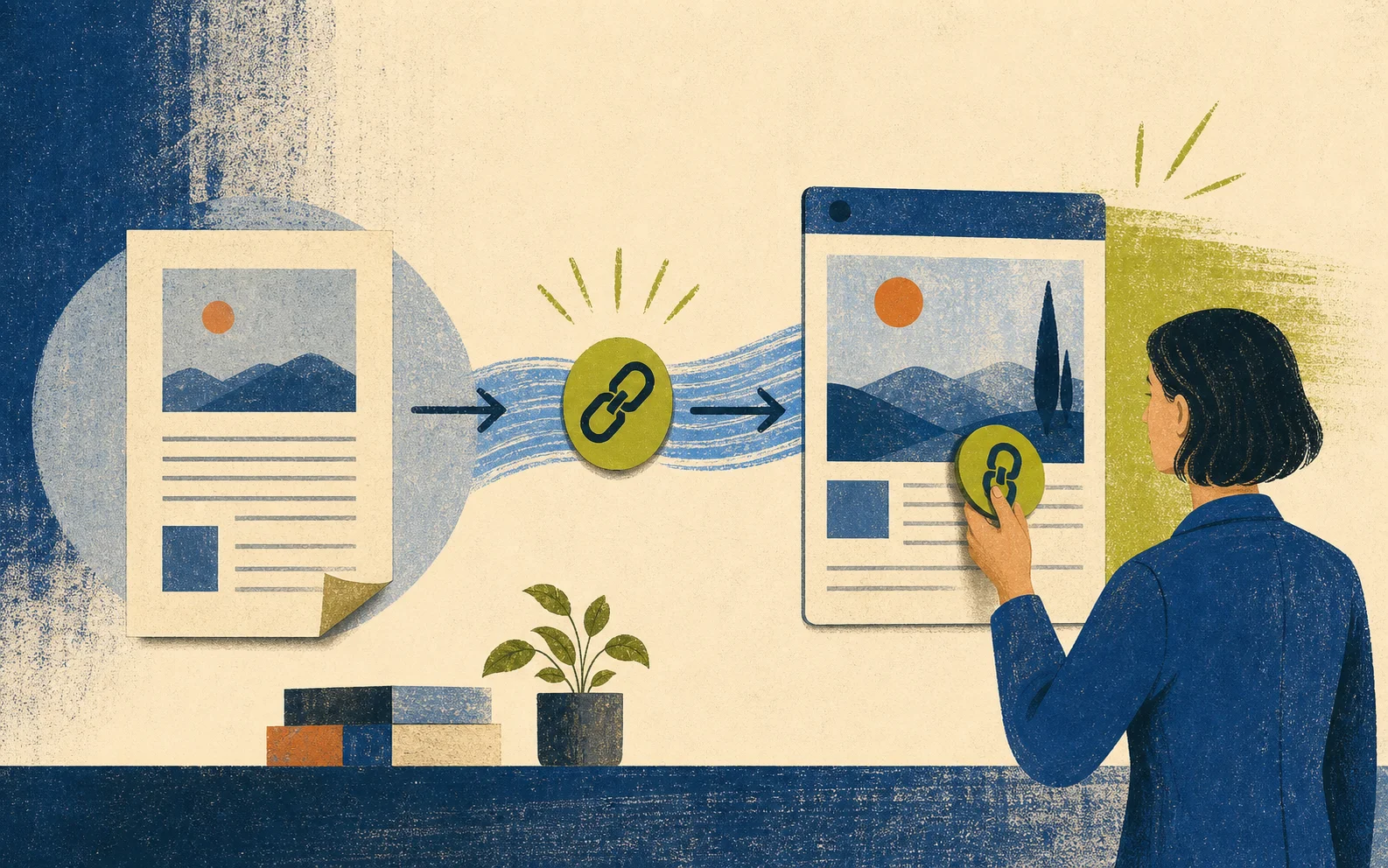
An organic link is a backlink you earn when another website chooses to reference your page because it helps its readers. You haven’t paid for that placement or made the link a condition of an exchange.
People use “organic”, “natural” and “editorial” quite loosely. When someone offers you a natural link, I’d want to know how they get it placed.
When I’m trying to work out what a link actually is, I start with why it’s there and who decided to include it. Let me show you what I mean.
Organic links, in plain English: someone finds a reason to send their readers to your page and chooses to link to it. You can help them discover the page, but you haven’t bought or required the reference.
What does an organic link look like?
Imagine you publish a cash-flow template with a clear explanation of how to use it. An accountant writing a guide for small business owners finds it, tries it, and links to it where they explain how to plan next month’s expenses.
The accountant is recommending something their reader can use. The link should take them straight to the template, rather than making them search your homepage for it.
Here’s an illustrative sentence with a working link to show you the same principle:
Before you pitch a study, check whether you’ve explained what makes research worth citing, including the sample and how you collected the data.
The bold, clickable words tell you what you’ll find. The destination expands on that exact question. This is an internal-link illustration, not evidence that another website has endorsed us. For an earned backlink, an independent publisher would need to choose the reference.
Three examples I’d use to explain the difference
These are hypothetical examples, not results from our campaigns. I’m using them to separate the arrangement behind a link from how it looks on the page.
1. A writer links to your research
You publish a study of response times across a clearly defined sample of businesses. A journalist uses one finding in an article and links to your study so readers can check the numbers.
If the journalist independently chooses your study without payment or a required exchange, that’s an earned citation. Make the sample and method easy to find so they can check the claim before using it.
2. You pay for a relevant placement
Now imagine a publisher offers to include your template in a small-business article for a fee. The audience fits, the paragraph makes sense, and readers might genuinely find it helpful.
That’s a paid placement. Ask how the publisher will label and qualify it.
Google says paid links should use rel="sponsored", with nofollow also acceptable. Buying links to manipulate rankings falls under its link-spam policy. You can evaluate a sponsored placement for its audience value without presenting it as an earned endorsement.
3. A link looks natural, but you arranged the whole thing
Suppose you control another blog and publish an article mainly to link back to your service. You write a relevant paragraph and use your brand name instead of an obvious sales keyword.
You created that reference yourself. Using a brand name and writing a relevant paragraph doesn’t make it an independent endorsement.
Organic links versus paid and self-created links
| Type | How it gets there | How I’d describe it |
|---|---|---|
| Earned editorial link | A publisher chooses your page as a useful source without compensation for the placement | An organic backlink, whether they found you themselves or through outreach |
| Paid or sponsored link | A placement is agreed in return for payment or another benefit | A commercial placement that needs appropriate qualification, even when relevant |
| Self-created link | You add it to a profile, comment or site you control | A link you created, not an independent endorsement |
If you’re reviewing a competitor’s backlinks, you might only have the published page. You may not know whether money changed hands or who arranged the link. I’d record that as unknown rather than assume it was earned. A relevant paragraph alone doesn’t tell you the whole story.
Does organic automatically mean valuable?
No. An editor might genuinely choose your page, but very few people read their article or click the link. You’ve earned a citation, but you haven’t necessarily gained useful traffic or enquiries.
A properly qualified sponsored placement could send interested people to your website. That can have business value too. I’d keep two separate questions in your reporting: how did we get the link, and what did it do for us?
Can you ask for a link and still earn it?
Yes. If you tell an editor about a broken reference and they independently choose your guide as a replacement, your outreach led to an editorial decision. They must be free to decline, without a compulsory link or an exchange tied to the placement.
Paying an agency to research, write or promote your content is different from paying the publisher for a link. Before accepting a proposal, I’d ask:
- Are you paying the publisher? Ask about money, products or other benefits offered for the placement.
- Who chooses the destination and wording? Find out how much control the editor actually has.
- What happens if the editor declines? Ask whether the fee covers outreach work, a guaranteed placement or a different arrangement.
Those answers should help you understand what you’re buying. The label “organic outreach” doesn’t explain it by itself.
How I’d check whether a link makes sense
You don’t need a complicated scoring system to start. Open the article, read the paragraph around the link, then visit the destination.
- Check who chose it. Was it the editor’s choice, a paid agreement, or something you added yourself? If you don’t know the arrangement, don’t assume it was earned.
- Look at what the reader gets. Does the destination support a claim, explain a step or provide the resource the paragraph promises?
- Check the actual page being linked. If the article mentions your template but sends people to a homepage where they can’t find it, that’s a poor experience.
- Read the clickable words. They should help you understand where you’re going. A brand name doesn’t prove a link is organic, and a descriptive keyword doesn’t automatically make it spam.
- Look beyond the metric. Read other articles on the site. Is there a clear audience and somebody taking care of what gets published?
A high domain metric wouldn’t answer those questions for me. Read the page and understand its audience before deciding what the opportunity is worth.
Does organic mean dofollow?
No. These describe different things. “Organic” describes how the link was earned. Link attributes such as nofollow or sponsored give search engines information about the relationship.
A publisher can independently cite your research and still add nofollow. That doesn’t change the fact that they chose to reference it. And a paid link without that attribute doesn’t suddenly become organic.
You can read Google’s guidance on qualifying outbound links for the technical distinction. I’d avoid judging the whole value of a mention from one attribute.
Will an organic backlink increase your traffic?
Someone clicking a backlink gives you referral traffic. Organic search traffic comes from unpaid search results. Neither is guaranteed by earning a link. I’ve covered what to measure in does link building increase organic traffic?
Where I’d start with your website
Pick one page you’d be comfortable recommending to somebody else. It could be a useful template, a detailed explanation or research they can check. What would another writer use from it in their own article?
If the answer isn’t clear yet, improve that part first. You might need a worked example, a better explanation or the source behind a claim. Once there’s a specific reason to reference the page, you can look for people whose readers would benefit from it.
For the wider approach, read my organic link-building guide. If you’re ready to work through the outreach, the next step is how to get organic backlinks.
Move from research to delivery
Need a managed link-building workflow?
Compare package scope, pricing, campaign inputs, and delivery records across the Serp Solutions service collection.
Explore services