
Natural Link-Building Techniques I Would Use
A practical decision matrix for choosing a natural link-building technique by evidence, fit, time to value, and failure risk.
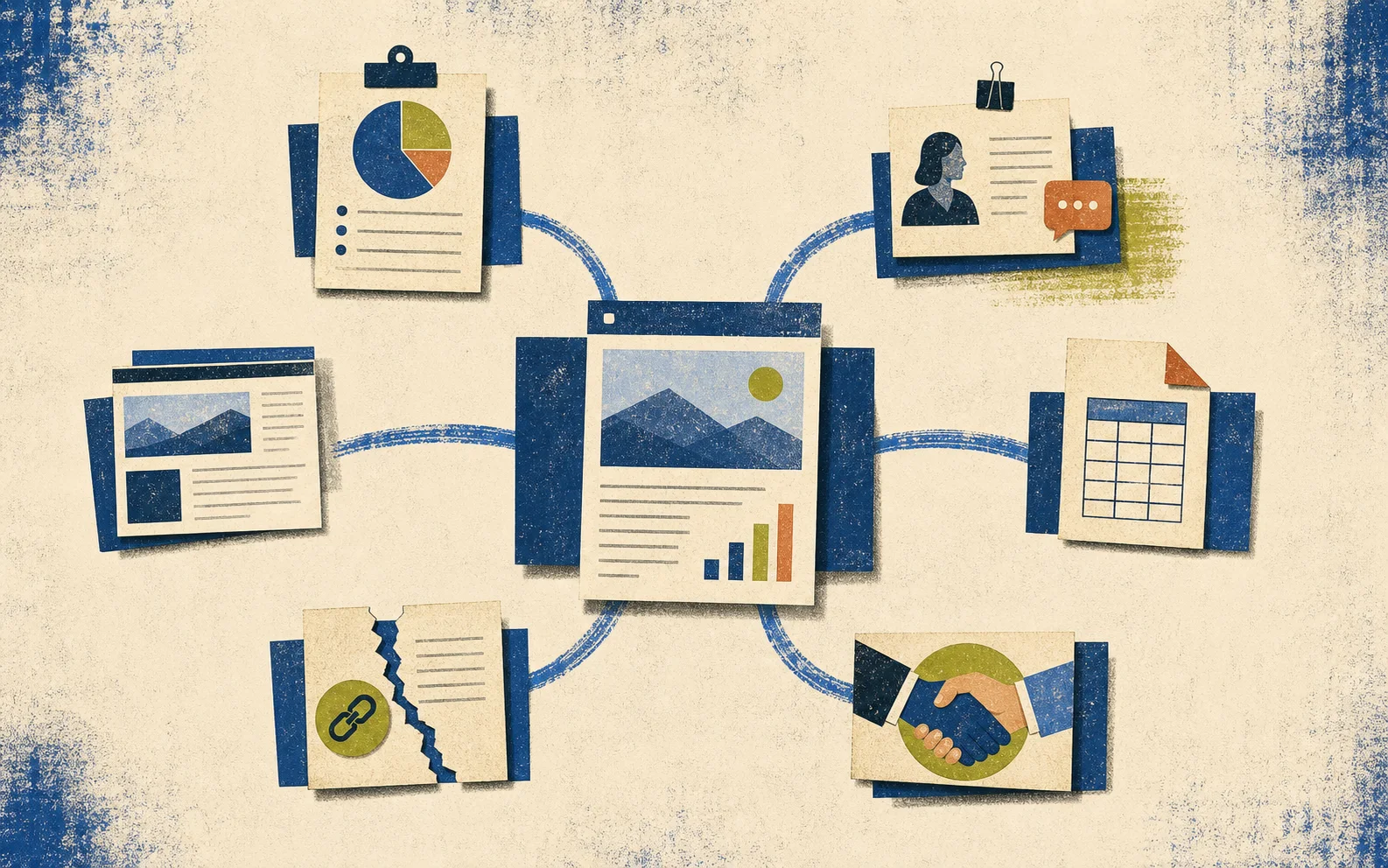
There is no single natural link-building technique that works for every website. The best tactic depends on what you can credibly contribute, which audience you need to reach, and what publishers in that market already reference.
Instead of another list of tactics, this is the decision tool I would use to choose one.
Selection principle: choose the technique that matches the evidence or access you genuinely possess. Do not choose a tactic first and manufacture a weak asset to fit it.
The technique decision matrix
The time ranges below are my planning judgement, not a Google benchmark or a performance promise. “Time to value” means the usual time needed to create something credible and begin useful outreach—not the time required to rank.
| Technique | Use it when | Planning range | Main failure mode | Evidence to create |
|---|---|---|---|---|
| Original data | You control a meaningful dataset or can run a sound study | 4–12 weeks | Small, biased, or unexplained sample | Method, sample, limitations, downloadable results |
| Practical guide | You can demonstrate a process better than current references | 2–6 weeks | Commodity summary with no lived detail | Steps, screenshots, examples, revision date |
| Guest contribution | You have a view that fits a specific publication and audience | 2–8 weeks | Article exists mainly to carry an anchor | Original argument, examples, transparent author identity |
| Expert commentary | You can answer quickly with attributable specialist judgement | Days–4 weeks | Generic quote or unsupported certainty | Concise claim, basis, caveat, author profile |
| Template or tool | A repeated task can be made easier | 2–10 weeks | Novelty without recurring utility | Working asset, instructions, example output |
| Mention reclamation | Your brand or research is already discussed | 1–4 weeks | Request adds no reader value | Exact mention and best verification URL |
| Broken-resource replacement | You have a close, current substitute | 1–6 weeks | Irrelevant replacement pitched at scale | Broken reference, content match, current source |
| Partner resource | Two organisations can serve an overlapping audience | 4–12 weeks | Reciprocal link page with no useful asset | Joint guide, case study, or implementation resource |
When not to use each approach
Do not publish “original data” when the sample cannot support the headline. Do not write a definitive guide without direct experience or careful source work. Do not guest post where the audience fit is weak. Do not build a tool you cannot maintain. Do not reclaim a mention when your homepage adds nothing. And do not pitch a broken-link replacement that solves a different problem.
Consistent profiles and branded properties can support identity and discovery, but they are not substitutes for independent editorial links. See foundation links and branded web properties for that narrower purpose, or review the quality-control rules before outreach.
How I would choose a technique
Start with the assets and access you already have. If you own useful data, lead with research. If you have strong practical expertise, use guides, quotes, and guest contributions. If the brand has existed for years, check mentions and broken historical links first.
Choose one method, run a controlled campaign, and document the result. Scaling five unproven tactics at once creates activity but teaches very little.
Match the advantage to the method
- You have proprietary data: lead with research and journalist outreach.
- You have practical expertise: use detailed guides, expert commentary, and guest contributions.
- You have a useful product workflow: publish templates, calculators, or implementation resources.
- You have an established brand: start with unlinked mentions and lost-link reclamation.
- You have strong industry relationships: develop joint resources, interviews, and genuinely useful partner content.
This matching step is where a campaign becomes defensible. It turns the question from “How can I get a link?” into “What can I contribute that this market cannot get from a generic summary?”
Use the organic backlink workflow to turn the chosen technique into a repeatable process.
Primary reference
Google’s current guidance for Search and generative AI features prioritises unique, non-commodity content with a first-hand point of view. That principle is more durable than choosing a technique because it appears on a popular tactics list.
Move from research to delivery
Need a managed link-building workflow?
Compare package scope, pricing, campaign inputs, and delivery records across the Serp Solutions service collection.
Explore services